
PLC-5 I/O Modules Replacement Guide
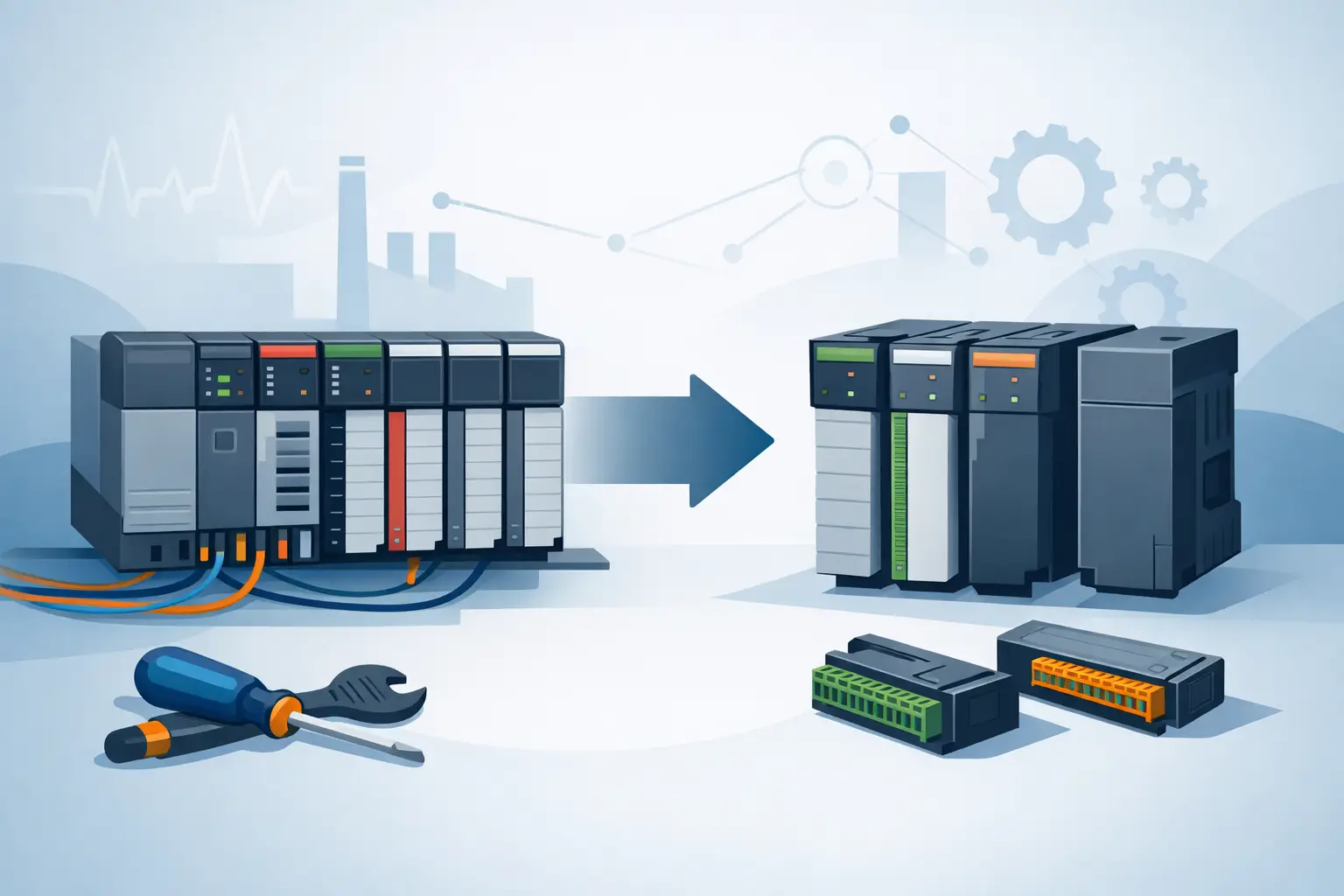
A failed rack input card at 2:00 a.m. rarely leaves much room for debate. In most plants, plc 5 i o modules replacement is not a theory exercise - it is a time-sensitive purchasing and maintenance decision tied directly to uptime, spare stock, and system risk.
For legacy Allen-Bradley PLC-5 platforms, the real issue is usually not whether a module can be replaced. The issue is whether the exact module can be sourced fast enough, whether the rack configuration is fully understood, and whether the replacement choice protects the process without creating a larger migration problem later. That calls for a practical, part-number-driven approach.
What plc 5 i o modules replacement really involves
On paper, replacing a PLC-5 I/O module sounds simple: remove the failed card, install the correct replacement, and return the rack to service. In the field, it depends on several variables. You need the original module catalog number, the electrical type, the rack addressing method, the terminal wiring arrangement, and the condition of the chassis, backplane connectors, and field terminations.
A digital input module and a digital output module may share the same rack family, but that does not make them interchangeable. Even among similar modules, voltage ranges, current ratings, isolation, fused or non-fused designs, and point counts matter. The wrong assumption can turn a fast repair into a longer outage.
That is why experienced buyers and controls teams start with identification before they start with availability. If the only information on hand is “PLC-5 card,” there is not enough information to place a clean order.
Identify the exact module before ordering
The most reliable starting point is the catalog number printed on the installed module. For PLC-5 systems, that often means a 1771-series I/O module used with a PLC-5 processor and compatible chassis. If the faceplate label is damaged or unreadable, the next best source is the panel documentation, electrical drawings, BOM records, or spare parts lists maintained by maintenance or engineering.
Part-number accuracy matters because small differences can affect fit and function. A module may look physically correct in the rack while still being electrically wrong for the application. AC versus DC, sourcing versus sinking, relay versus transistor, analog input type, thermocouple support, and scaling method are all common points where replacement mistakes happen.
If your site has made field modifications over time, do not assume the drawings match the live panel. Many legacy systems have undocumented substitutions, added interposing relays, or wire changes made during emergency repairs. A quick visual verification in the cabinet is often worth the extra few minutes.
Check the rack and wiring context
For plc 5 i o modules replacement, the module itself is only part of the decision. You also need to confirm the chassis slot location, keying, swing-arm or terminal arm style, and any external field wiring considerations. In older systems, terminal arms may have wear, broken latches, or labeling issues that complicate a simple swap.
Analog modules need even closer review. Signal type, channel configuration, shield grounding, and calibration expectations can all affect startup after replacement. If the failed module is tied to a process loop, a rushed install without verification may restore the controller but still leave the process unstable.
New, surplus, or refurbished depends on the job
Buyers handling PLC-5 hardware usually balance three factors: speed, condition, and long-term strategy. New legacy inventory can be limited and may carry a premium. Surplus stock can be useful when exact part matching is the priority. Refurbished units may make sense when tested availability is better than waiting for a harder-to-find condition grade.
There is no single correct answer. If the failed I/O card supports a non-critical station and a migration project is already scheduled, a tested replacement that restores production may be the practical move. If the module supports a validated process, a regulated environment, or a high-value line where repeat failure would be expensive, buyers often apply stricter sourcing criteria.
The key is to align the purchase with the production risk. A low-cost replacement that arrives late or fails early is not a low-cost decision.
When a direct replacement is the right move
Direct replacement is usually the most efficient option when the plant needs the same rack architecture, same field wiring approach, and minimal commissioning effort. This is common in facilities that still rely on PLC-5 systems for stable machine cells, utilities, or process skids that are not yet budgeted for full modernization.
In those cases, the objective is continuity. Maintenance wants the line running. Procurement wants an exact match. Engineering wants to avoid introducing a compatibility issue during an unplanned stop. A correct like-for-like module supports all three.
This is also where supplier responsiveness matters. Technical buyers do not need broad theory during an outage. They need confirmation on part number, condition, stock status, and shipment timing. American Automation 24 serves this type of requirement by focusing on searchable automation inventory and structured ordering for exact replacement parts.
When replacement is not enough
Not every failed module should simply be swapped and forgotten. Repeated module failures often point to a bigger issue: field voltage problems, grounding faults, overloaded outputs, cabinet heat, vibration, or backplane wear. If the same slot or function keeps failing, the module may only be the symptom.
This is especially true on aging PLC-5 systems that have been in service for decades. Connectors oxidize, cabinets collect contamination, and power supply performance drifts over time. If a replacement card restores operation but the root cause stays in place, another downtime event may not be far behind.
A practical replacement plan should include a quick inspection of the surrounding hardware. Look at the chassis condition, power supply health, terminal tightness, field device load, and any signs of arcing or heat damage. Those checks are basic, but they often separate a one-time repair from a repeat service call.
Migration pressure changes the buying decision
Some plants are actively migrating away from PLC-5 platforms. Others are keeping them in service because the process is stable, the machine still delivers output, and the capital plan is focused elsewhere. Both situations are common, and both affect how PLC-5 I/O modules replacement should be handled.
If migration is near-term, buyers often focus on maintaining the existing system just long enough to bridge the gap. That usually means securing critical spares, prioritizing exact replacement modules for known failure points, and avoiding unnecessary engineering changes.
If migration is still uncertain, the replacement decision may need a longer horizon. In that case, it makes sense to review spare stock depth, high-risk modules, and lead-time exposure across the installed base. A single card failure is often what exposes a larger spare-parts gap.
Questions worth answering before you buy
Before placing the order, confirm the exact module number, electrical specification, and rack location. Verify whether the existing terminal arm or field connector will be reused, and check whether the replacement must match any special firmware or revision requirements tied to the application.
It also helps to know whether the site needs one module or a small spare quantity. If the part is critical and hard to source, buying only the immediate replacement can leave the plant exposed on the next failure. For legacy hardware, the difference between one unit and two units can be minor compared with the cost of another emergency stop.
Procurement speed matters, but accuracy matters more
For MRO and controls buyers, the pressure is always the same: restore operation quickly. But with legacy automation parts, speed without verification can create returns, delays, or installation errors. The better workflow is straightforward - identify the exact part, confirm compatibility in the rack, review urgency, then buy from a supplier equipped to support exact-model procurement.
That approach is not glamorous, but it is how downtime gets managed in the real world. Part-number discipline, good panel records, and access to replacement inventory will do more for legacy PLC support than broad modernization talk during an active outage.
If you are managing plc 5 i o modules replacement, treat each failure as both a repair event and a spare-parts signal. The card that failed today may be the one that tells you where your next shortage will be.