
Parts Authenticity for Industrial Automation Buyers
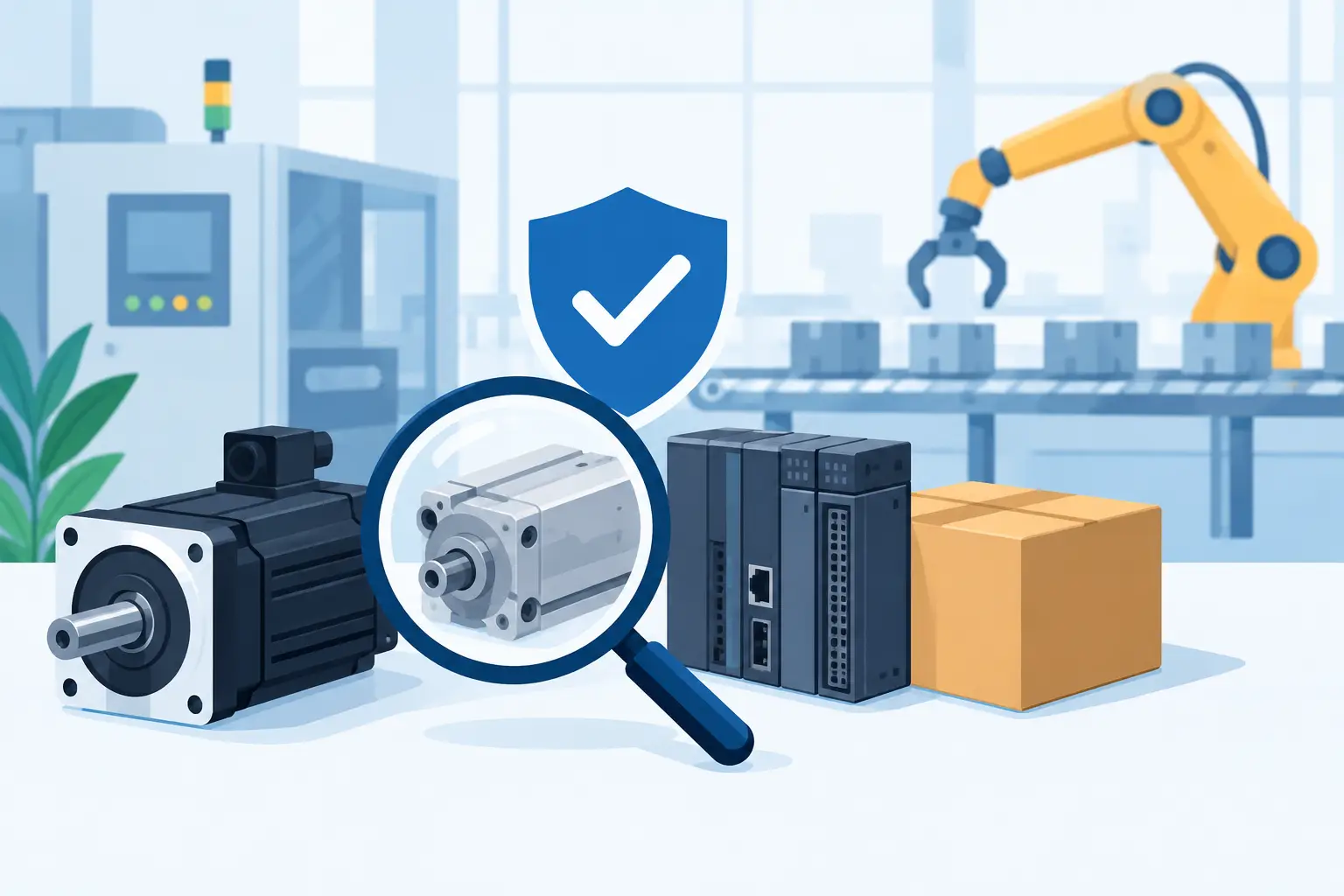
A failed PLC power supply or photoelectric sensor is rarely the moment to gamble on an unfamiliar source. Parts authenticity affects more than whether a component looks correct in the box. It affects fit, electrical performance, safety, warranty exposure, troubleshooting time, and the ability to restore production without creating a second failure.
For industrial buyers, the objective is straightforward: obtain the exact manufacturer part number, in the expected condition, with documentation and traceability appropriate to the application. That requires more than comparing a product photo and a low price. It requires a purchasing process built around verification.
Why Parts Authenticity Matters on the Plant Floor
Automation components operate within systems that depend on defined electrical, mechanical, and communication characteristics. A counterfeit, altered, or incorrectly represented part may power up and still create a problem. A drive may have incompatible firmware. A safety relay may not perform as specified. An encoder may produce unstable feedback. A sensor may have the wrong sensing range or output type despite a similar label.
The immediate cost of an inauthentic part can be a rejected installation. The larger cost often appears later: intermittent faults, unplanned diagnostics, damaged connected equipment, missed production targets, or a safety concern that must be investigated. These risks are especially significant when replacing PLC modules, variable frequency drives, servo equipment, safety devices, industrial communication hardware, and power supplies.
Authenticity also supports consistency. When maintenance teams stock known, correctly identified components, they can follow established drawings, parameter records, wiring standards, and spare-parts procedures. That reduces uncertainty during a time-sensitive repair.
What Genuine Does and Does Not Mean
A genuine part is manufactured by, or for, the stated brand and matches the manufacturer’s intended product design and identification. It should not be confused with a part that is simply compatible, refurbished, surplus, used, or new old stock.
Each of those descriptions can be valid when stated accurately. A refurbished PLC module, for example, may be a practical option for a legacy system if its condition, test process, and warranty terms are clearly understood. New old stock may be appropriate when an obsolete sensor or control component is no longer in current production. Neither category should be represented as factory-new current stock if it is not.
For procurement teams, the key question is not whether every purchase must be newly manufactured. It is whether the product description gives an accurate basis for the installation decision. Condition, origin, packaging, revision level, and support expectations all matter.
Parts Authenticity Checks Before You Order
Start with the full manufacturer part number from the failed unit, panel documentation, approved bill of materials, or OEM equipment record. Do not rely only on a product family name. A single character can distinguish a 24 VDC input module from a 120 VAC version, a PNP sensor from an NPN model, or a connector style that will not mate with the existing cable.
Confirm the manufacturer, complete model number, and any meaningful suffixes. Then review voltage, current rating, I/O type, protocol, mechanical dimensions, and environmental rating against the installed component. For drives, servo products, PLCs, and communication modules, check hardware revision and firmware requirements where applicable.
A credible product listing should make identification easy rather than forcing the buyer to infer what is being sold. Look for a clear brand name, exact SKU or manufacturer number, product condition, and available product specifications. If the part is obsolete, discontinued, remanufactured, or an alternate, that status should be clear before the order is placed.
When the application is critical, request confirmation from the supplier before purchasing. Provide the full part number, a photo of the existing label if available, and the required delivery date. This is particularly useful for components with multiple revisions, regional variants, or similarly numbered product lines.
Verify the Supplier, Not Just the Product Photo
A product image can help identify a component, but it is not evidence of authenticity. Industrial buyers should evaluate whether the supplier can support the transaction with clear order records, reachable customer service, defined shipping processes, and direct answers to technical identification questions.
The supplier should be able to state what is being offered and avoid unsupported claims. If a listing is described as new, buyers should understand whether that means factory-new, unopened surplus, or another condition category. If a supplier offers a replacement or cross-reference, confirm that it is an approved alternative for the specific application rather than assuming functional similarity is sufficient.
Price is a useful signal, but not a standalone test. A low price may reflect excess inventory, older date codes, changed market demand, or a condition difference. It can also indicate that the source cannot provide the same level of traceability or support. Compare the total operational value: correct identification, availability, shipment timing, return process, and assistance if the received item does not match the order.
Receiving Inspection Protects the Maintenance Window
The receiving dock is the last practical checkpoint before a part reaches the storeroom or maintenance cart. Keep the packing slip and order confirmation with the receiving record, especially for high-value or safety-related equipment. Verify the manufacturer name and full part number on the product label against the purchase order before the item is put away.
Inspect packaging and the component itself for signs of relabeling, damage, inconsistent printing, missing serial information, broken seals, or a mismatch between the box and the device. Packaging appearance alone is not decisive because manufacturers change labels and carton designs over time. Still, inconsistencies should trigger a pause and a supplier conversation before installation.
For controllers, drives, HMIs, and other configuration-sensitive equipment, record serial numbers, hardware revisions, and firmware details when available. This creates a useful maintenance record and can shorten future support work. It also helps a plant maintain control over what is installed in production assets.
A practical receiving process typically includes these distinct checks:
- Match the full manufacturer part number and revision, when relevant, to the purchase order and approved documentation.
- Confirm the stated condition matches what was ordered, including any new, surplus, refurbished, or used designation.
- Inspect labels, housing, terminals, connectors, and packaging for damage or obvious inconsistencies.
- Retain order, shipment, and serial-number records for critical components.
- Escalate any discrepancy before installation, particularly for safety, motion, power, or networked control equipment.
Legacy Equipment Requires More Context
Parts authenticity becomes more complex when supporting legacy platforms. A manufacturer may have discontinued a module years ago, and remaining inventory may come from surplus channels or equipment decommissioning. In those cases, a buyer may reasonably choose an older genuine component over a costly system retrofit, but the decision should account for condition and remaining support life.
Ask whether the item is tested, whether it has been repaired, and whether any warranty or return terms apply. Confirm the module’s revision and compatibility with the installed rack, CPU, drive, or network. A genuine but incompatible revision can still extend downtime.
It may also be the right time to evaluate a planned migration. If a plant repeatedly depends on scarce legacy parts, holding verified spares can protect short-term uptime while engineering develops a replacement plan. Emergency sourcing and modernization solve different problems, and both deserve a place in the maintenance strategy.
Build Authenticity Into the Purchasing Process
The most effective approach is not a one-time inspection. It is a repeatable process. Maintain approved part numbers, preferred manufacturers, required revisions, and known acceptable alternatives in the CMMS, ERP, or spare-parts database. Include photos of installed labels for difficult-to-read or legacy items. These records help procurement source accurately and help maintenance avoid substitutions made under pressure.
For frequently used items, define reorder points and keep appropriate spares on hand. The right inventory level depends on lead time, failure history, production impact, and whether an alternate is qualified. A commonly available sensor may not need the same stocking strategy as a discontinued PLC CPU or specialized servo drive.
American Automation 24 supports this process by helping buyers search branded automation components by exact manufacturer number across multiple major product lines. When a specification, condition, or compatibility question remains, resolving it before release to the floor is the faster path.
A verified replacement part does more than close a purchase order. It gives the maintenance team a defensible starting point for returning equipment to service with fewer unknowns.