
Guide to Variable Frequency Drives
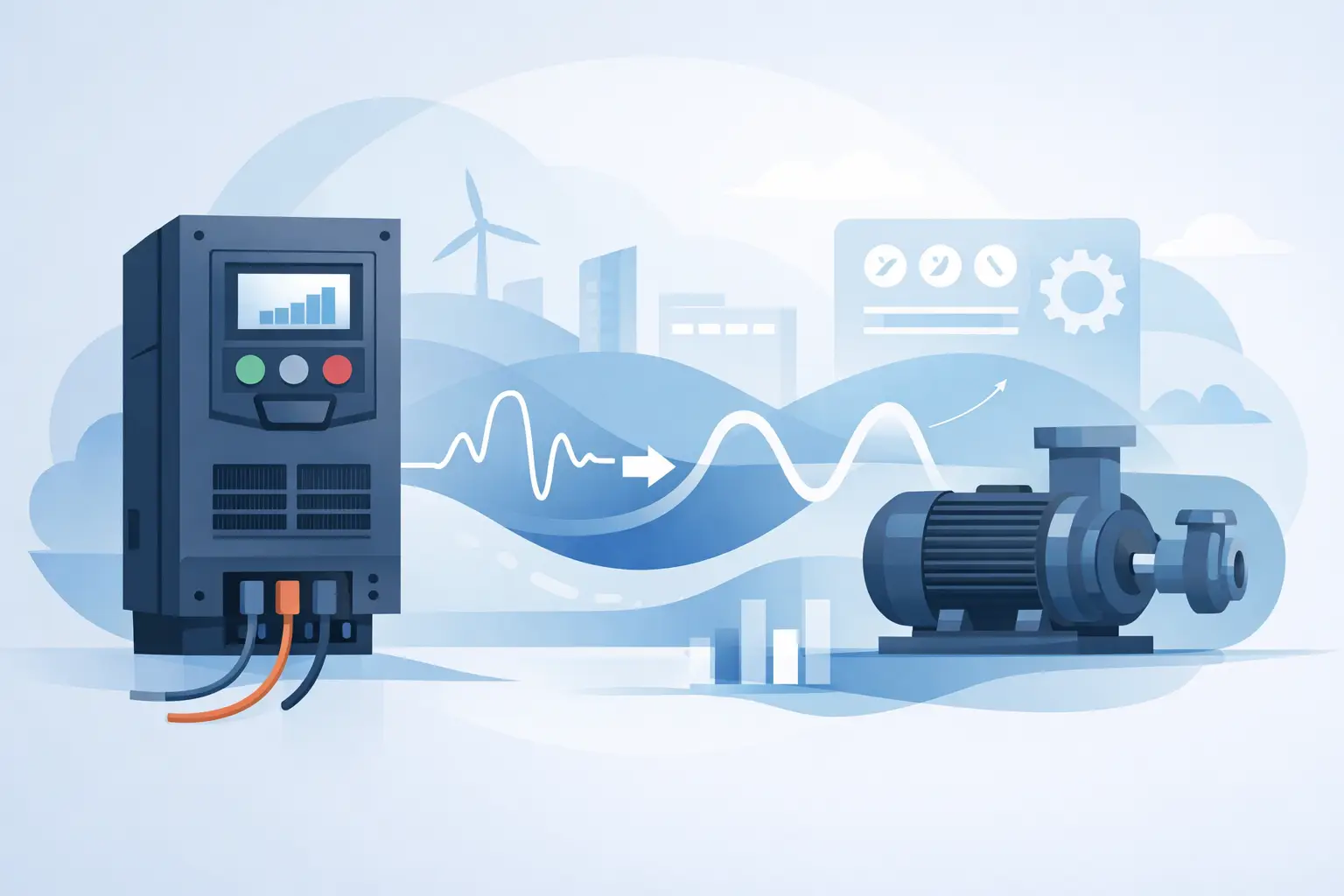
A motor that starts hard, runs hotter than it should, and only operates at full speed is usually costing more than it needs to. This guide to variable frequency drives is written for plant engineers, maintenance teams, integrators, and buyers who need a clear way to evaluate, specify, replace, or source a drive without wasting time on theory that does not affect the job.
Variable frequency drives, or VFDs, control AC motor speed by adjusting output frequency and voltage. In practical terms, that gives you tighter process control, softer starts, lower mechanical stress, and in many applications, lower energy consumption. They are common in pumps, fans, conveyors, mixers, compressors, and packaging equipment, but the value of a VFD depends on the load, the motor, the environment, and the level of control the machine actually needs.
What a variable frequency drive actually does
A VFD takes incoming AC power, converts it to DC through a rectifier section, and then recreates a controlled AC output through an inverter section. That output is not fixed at line frequency. The drive changes frequency to change motor speed, and it manages voltage in relation to frequency so the motor can produce usable torque across its operating range.
For maintenance and procurement teams, the key point is simple: a VFD is not just an on-off motor starter. It is a control device, a protective device, and often a communication node inside the machine or process. That means replacement decisions should never be based on horsepower alone.
A guide to variable frequency drives by application
The fastest way to narrow down a drive is to start with the load type. A variable torque load such as a centrifugal fan or pump usually has different sizing and overload requirements than a constant torque load such as a conveyor, extruder, or positive displacement pump. If the application has high breakaway torque, frequent starts, rapid deceleration, or reversing duty, the drive selection gets more specific.
Fans and pumps are often the easiest VFD applications because speed reduction can produce substantial energy savings. Conveyors and material handling systems tend to put more emphasis on acceleration control, low-speed torque, and coordination with sensors, PLCs, and safety circuits. Mixers and process equipment may need stable speed under changing load. HVAC duty, washdown duty, and hazardous area requirements also change what enclosure, filtering, and certifications make sense.
If you are replacing a failed unit, application context matters just as much as the catalog rating. A drive that matches the old horsepower but ignores braking demand, ambient temperature, or control network requirements can create a second failure.
How to size a VFD without creating new problems
Drive sizing starts with the motor nameplate, but it should not end there. You need the motor voltage, full-load amps, horsepower, phase, base frequency, and speed. In most cases, current is the critical number. When a replacement drive is selected only by horsepower, problems show up quickly on applications with high torque demand or unusual duty cycles.
Duty matters. If the application is light and predictable, a standard rating may be enough. If the motor runs in high ambient temperatures, inside a crowded panel, or at low speed for long periods, derating may apply. Long motor leads, high carrier frequency settings, and poor ventilation can all affect performance and service life.
Overload rating is another common miss. Some drives are optimized for normal duty, often suited to variable torque applications. Others are rated for heavy duty and tolerate higher short-term overload. The difference matters on conveyors, hoists, and machinery with abrupt load changes.
Single-phase input also needs attention. Many plants use available single-phase power for smaller equipment, but not every three-phase drive can simply be applied that way without current derating. The manufacturer documentation should decide that question, not guesswork.
Control methods and why they matter
Not every application needs the same control method. For basic fans and pumps, volts-per-hertz control may be sufficient. It is simple and cost-effective. For tighter speed regulation or stronger low-speed torque, sensorless vector control is often the better fit. If the machine needs highly accurate torque or speed response, closed-loop vector control with encoder feedback may be required.
The trade-off is cost and complexity. More advanced control improves performance, but it also increases setup effort and can introduce more commissioning variables. For a standard replacement in an established machine, matching the existing control approach is usually safer than over-specifying features that will never be used.
Speed reference options also affect compatibility. Some systems use keypad control, others use analog signals such as 0-10 V or 4-20 mA, and many rely on digital fieldbus communication. If the existing PLC or HMI expects Ethernet/IP, Modbus, PROFINET, EtherCAT, or another protocol, that requirement should be confirmed before the order is placed.
Installation factors that affect drive life
A properly sized drive can still fail early if the installation is poor. Heat is one of the biggest causes. Panel layout, airflow, ambient temperature, and clearance around the heat sink all matter. A drive mounted too close to other heat-producing components can run within nameplate limits on paper and still trip in real operation.
Electrical noise is another factor. Grounding, shield termination, output cable routing, and separation between motor leads and low-level control wiring all affect reliability. On longer motor cable runs, reflected wave effects can stress motor insulation. Depending on cable length and motor construction, a dV/dt filter or load reactor may be appropriate.
Line quality should also be checked. If the facility has significant voltage imbalance, incoming transients, or shared power issues, the drive may need line reactors, surge protection, or additional filtering. In plants with many drives, harmonics may become part of the specification discussion rather than an afterthought.
Environmental exposure cannot be ignored. Dust, oil mist, corrosives, and washdown conditions quickly separate a standard panel-mounted unit from a suitable one. Enclosure rating, conformal coating, and mounting location should reflect the actual floor conditions, not the ideal ones.
Common fault patterns and what they usually mean
Most VFD faults are not random. Overcurrent faults often point to short acceleration times, mechanical binding, motor issues, or incorrect parameters. Overvoltage faults commonly appear during deceleration, especially on high-inertia loads where braking energy has nowhere to go. In that case, a longer decel ramp, braking resistor, or regenerative solution may be needed.
Undervoltage faults may come from unstable incoming power or upstream supply issues. Overtemperature faults usually relate to ventilation, ambient heat, clogged cooling paths, or overloaded operation. Ground fault and short circuit alarms need to be treated carefully because they may indicate cable damage, motor winding problems, or internal drive failure.
Parameter errors are more common than many teams expect after a replacement. A drive may power up normally but still behave incorrectly because motor data, acceleration settings, minimum speed, stop mode, or I/O assignments were not matched to the previous installation. If a spare is being stocked for a critical machine, saving a known-good parameter backup is worth the effort.
When to repair, retrofit, or replace
It depends on the age of the platform, the criticality of the machine, and how fast you need the line back. If the drive is current production, the fault is isolated, and repair turnaround is acceptable, repair can make sense. If the platform is obsolete, lead times are uncertain, or repeated failures are already occurring, replacement is often the better operational decision.
Retrofit planning gets more involved when the old unit used legacy communications, special feedback hardware, or nonstandard panel cutouts. In those cases, the cost is not only the drive. It includes wiring changes, commissioning time, possible PLC edits, and startup risk. Buyers who focus only on unit price can end up spending more in downtime and labor.
For stocked spares, exact compatibility should be confirmed at the part-number level whenever possible. Brand family, voltage class, current rating, enclosure type, keypad options, communication cards, braking hardware, and accessory availability all affect whether the replacement will actually drop into service.
What buyers should verify before ordering
A practical guide to variable frequency drives should end where most real plant decisions begin: the purchase checklist. Before placing an order, confirm the full model number, input voltage and phase, output current rating, overload class, enclosure, required control method, communications, and any accessories needed for the existing installation. If the application uses external braking, reactors, filters, or encoder feedback, those details matter as much as the base drive.
It also helps to confirm whether the order is for a failed replacement, a planned spare, or a machine build. Each one has a different risk profile. A line-down replacement usually prioritizes exact fit and fast availability. A planned upgrade gives more room to evaluate alternate families or newer versions. A machine build may prioritize standardization across multiple OEM or plant platforms.
For teams sourcing across brands such as ABB, Allen-Bradley, Danfoss, Delta, Mitsubishi, Schneider, Siemens, and Yaskawa, organized part verification shortens the path from identification to order. That matters when downtime is active and the goal is continuity, not experimentation.
The best VFD choice is usually not the most advanced one. It is the one that matches the motor, the load, the control architecture, and the operating environment with the fewest surprises after startup. If you treat drive selection as a system decision instead of a catalog shortcut, you usually get better uptime and fewer repeat replacements.